

If you are looking for a single number, Semrush pricing starts at $139.95 per month.
That is the figure most people quote. It is also the reason many businesses end up overspending.
The reality of Semrush pricing in 2026 is no longer just a simple choice between “Pro” and “Guru.” What used to be a straightforward SEO subscription has turned into a layered ecosystem: classic SEO plans, AI-focused “Semrush One” bundles, more than a dozen optional toolkits (Local, Social, PR, Ads), and a separate user-seat pricing model that can quietly double your bill.
I have spoken with agency owners who signed up for the $249 Guru plan, assuming it covered everything, only to later realize they also needed the Trends add-on and two extra team seats. Their “$249 tool” turned into a $600+ monthly expense without any dramatic feature upgrade. Just quiet add-ons.
That is why most Semrush pricing articles don’t actually help. They copy the official pricing table, add a few bullet points, and call it a review. But pricing isn’t about features—it’s about what you actually pay over time.
This guide is written to fix that. I am going to dissect every single tier, calculate the “True Cost” of ownership, and show you exactly how to avoid the upsells you don’t need.
My Quick Take (TL;DR)
For the busy marketer who just wants the answer.
- Best for Freelancers: Pro Plan ($139.95/mo). It has everything you need to rank sites. Don’t upgrade unless you need historical data.
- Best for Agencies: Guru Plan ($249.95/mo). The branded PDF reports and Content Marketing Toolkit replace other tools like SurferSEO, making it worth the price.
- The Hidden Trap: User Seats. Adding a team member costs $45–$80/month each. If you have a team of 3, your bill will double.
- The AI Update: Unless you specifically need to track your brand inside ChatGPT, ignore the “Semrush One” bundles for now. Stick to the classic plans.
Click Here to Start Your 14-Day Free Trial
Quick Look: The 2026 Semrush Pricing Cheat Sheet
Compare the “Real” costs before you buy.
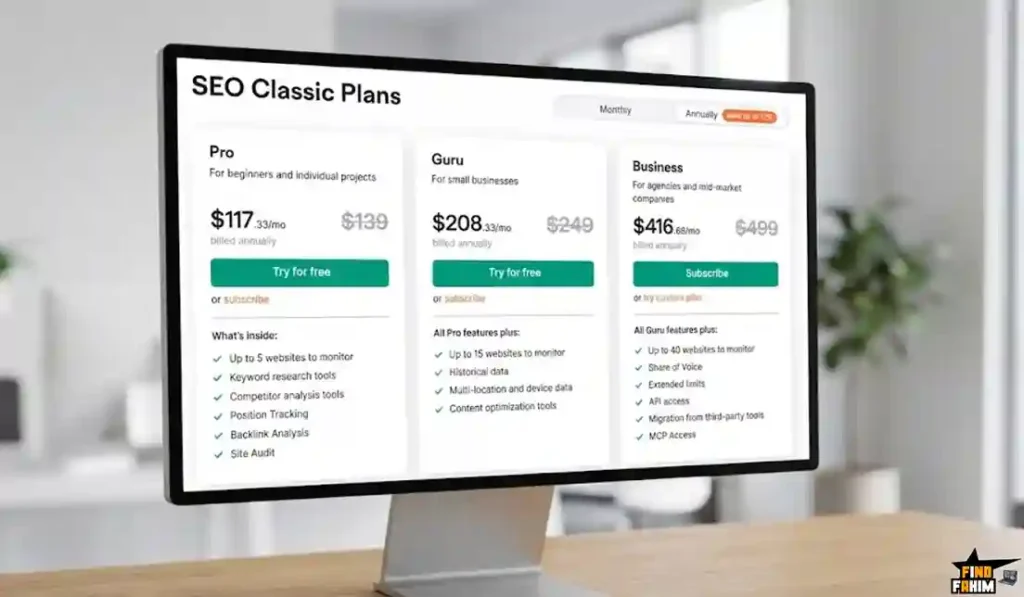
| Plan Tier | Monthly Price | Annual Price (Save 17%) | Who It’s Truly For | The “Killer” Value |
| Pro | $139.95 | $117.33/mo | Solopreneurs | Unlimited Reporting |
| Guru | $249.95 | $208.33/mo | Agencies | Historical Data & Branded PDFs |
| Business | $499.95 | $416.66/mo | Enterprises | API Access & Share of Voice |
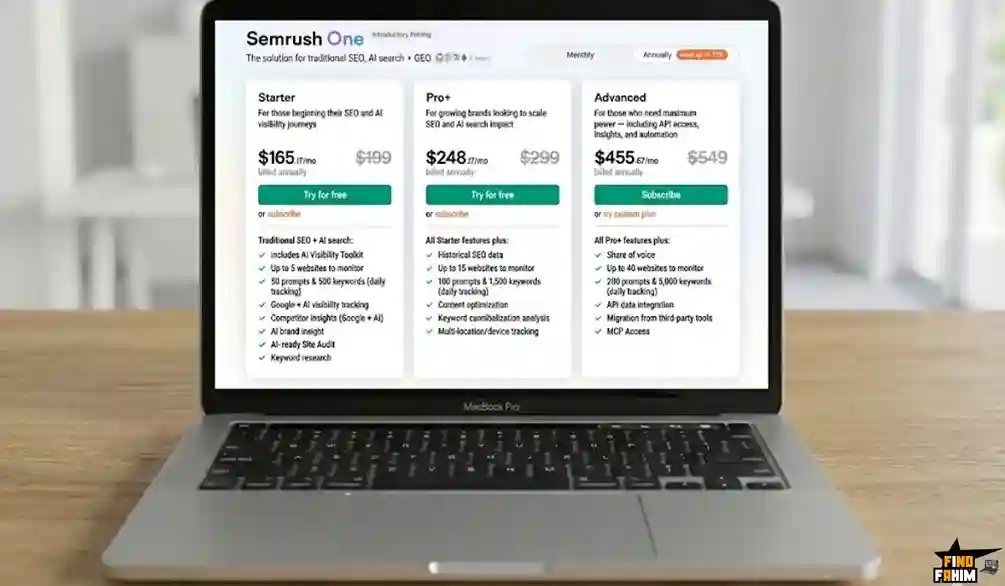
| Semrush One | $199.00 | $165.17/mo | SaaS Brands | AI Brand Tracking |
Get Semrush One (New AEO & GEO Plan)
The Foundation: Classic Plans & Core Features
How Semrush Pricing Changed in 2026
For most of the last decade, Semrush was purely an SEO tool. You paid for keyword data, backlinks, audits, and rank tracking. That worked—until generative AI changed how people discover brands.
With tools like ChatGPT, Google Gemini, and Perplexity influencing buying decisions, Semrush adjusted its pricing model. Today, it offers two clear paths:
- The SEO Classic Path: Built for ranking in Google’s traditional search results. (Plans: Pro, Guru, Business).
- The AI Visibility Path: Built for brands that need to know whether AI tools mention or recommend them. (Plans: Semrush One Starter, Pro+, Advanced).
Here is where people get burned: picking the wrong path. A local plumber doesn’t need to track ChatGPT answers. A VC-backed SaaS company probably does. Choosing incorrectly means paying for data you’ll never use.
In this section, we focus on the SEO Classic plans because they still make sense for about 90% of users.
1. The Semrush Pro Plan
Best For: Freelancers, Solopreneurs & Beginners
-
Monthly Price: $139.95 / mo
-
Annual Price: $117.33 / mo (Billed annually — Save 17%)
Do not let the “Pro” name fool you. This isn’t just a starter kit; it is more powerful than the enterprise plans of most other tools. For 90% of affiliate marketers and solo SEOs, this is all you will ever need.
What’s Inside:
-
Up to 5 websites to monitor (Projects)
-
Keyword research tools
-
Competitor analysis tools
-
Position Tracking
-
Backlink Analysis
-
Site Audit
The “Hard” Limits (Watch Out): The bottleneck here is the 500 Tracked Keywords limit. Remember, tracking “Plumber in New York” on Desktop and Mobile counts as 2 keywords. If you do local SEO for multiple cities, you will hit this limit fast. Also, you cannot see Historical Data (no time travel to see past traffic).
My Verdict: Start here. Unless you absolutely need to see traffic data from 2020, do not pay more. The annual price of $117.33 is a steal for this level of data.
2. The Semrush Guru Plan
Best For: Small Businesses, Agencies & Content Teams
-
Monthly Price: $249.95 / mo
-
Annual Price: $208.33 / mo (Billed annually — Save 17%)
This is the standard for anyone with paying clients. The price jumps by $110, but it replaces several other expensive tools (like SurferSEO) thanks to the content features.
What’s Inside (All Pro features plus):
-
Up to 15 websites to monitor
-
Historical data (View traffic trends since 2012)
-
Multi-location and device data
-
Content optimization tools (SEO Writing Assistant)
The “Killer” Features: The Historical Data is crucial for pitching clients—you can show them exactly when their traffic crashed under their previous agency. Plus, the Content Marketing Toolkit allows you to optimize articles in real-time inside Google Docs.
My Verdict: If you have Paying Clients, you need Guru. The ability to send professional, branded reports and explain historical traffic drops helps you retain clients longer.
3. The Semrush Business Plan
Best For: Agencies, Mid-Market Companies & Big Data Teams
-
Monthly Price: $499.95 / mo
-
Annual Price: $416.66 / mo (Billed annually — Save 17%)
This plan is often misunderstood. It is not just “Guru with more keywords.” It is a completely different tool designed for analyzing massive amounts of data and market dominance.
What’s Inside (All Guru features plus):
-
Up to 40 websites to monitor
-
Share of Voice (See exactly what % of the market you own)
-
Extended limits (5,000 tracked keywords)
-
API access
-
Migration from third-party tools (Free concierge service)
-
MCP Access
The Enterprise Exclusives: Share of Voice (SoV) is what executives care about—it shows market dominance, not just rankings. API Access allows you to pull raw data into your own internal dashboards. PLA Research gives you deep visibility into Google Shopping Ads for massive e-commerce brands.
My Verdict: Unless you have a team of 5+ people or a dedicated Data Analyst, this is overkill. 99% of agencies cap out at Guru.
Get Semrush SEO Classic Plan (Most Popular)
The “Hidden” Cost of Growth: User Seats & Team Fees
This is the section Semrush sales reps don’t like to talk about. This is where your budget goes to die if you aren’t careful.
The prices listed above ($139, $249, $499) are for ONE user seat only.
The “One User” Policy
Semrush is very strict about this.
- You cannot share passwords.
- Semrush tracks IP addresses and simultaneous logins.
- If you try to have your Virtual Assistant log in from the Philippines while you are logged in from New York, one of you will be kicked off, or your account will be flagged for “Suspicious Activity.”
If you need your business partner, writer, or VA to have their own login, you must pay for an additional seat. And the price depends on which plan you are on.
The “User Seat” Price List (Monthly)
| If you are on Plan… | Cost Per Extra User |
| Pro / Starter | $45.00 / mo |
| Guru / Pro+ | $80.00 / mo |
| Business / Advanced | $100.00 / mo |
Real-World Math: The “Small Agency” Trap
Let’s calculate the real cost for a small marketing agency with 3 team members (The Founder, an SEO Specialist, and a Content Writer).
Option A: The “Cheap” Route (Pro Plan)
- Base Plan: $139.95
- User 2: $45.00
- User 3: $45.00
- Total Monthly Bill: $229.95
Option B: The “Agency” Route (Guru Plan)
- Base Plan: $249.95
- User 2: $80.00
- User 3: $80.00
- Total Monthly Bill: $409.95
The Shock:
Many agencies budget for $250, but end up paying $410. That is an extra $1,920 per year just for logins.
Expert Hack: How to Save Money on Seats
If you are a small team working in the same physical office, you can technically share a login if you do not use the tool at the same time. However, this is risky and annoying.
A better strategy? Limit who gets a seat.
Does your Content Writer really need full Semrush access? Or do they just need the “SEO Writing Assistant”?
- Instead of buying them a full seat ($80), just export the content briefs for them or use the Google Docs extension, which sometimes has looser login requirements depending on the current update.
- Alternatively, buy them a cheaper tool (like a dedicated keyword writer) and keep Semrush for the Strategists.
The Advanced Tools (AI Bundles, Toolkits & Profit)
If you are a traditional SEO focused on Google rankings, the standard plans above are likely all you need.
But if you are a modern brand manager, PR professional, or an agency looking for high-quality leads, the standard plans might not be enough. You have likely heard about Semrush One and the confusing menu of “Toolkits.”
Is the $199 Semrush One Starter plan better than the $139 Pro plan?
Is the $90 Lead Generation tool worth it?
Let’s break down the new AI bundles, expose the full “Menu Pricing” of all 8 toolkits, and finally, do the math on whether Semrush actually makes you money compared to the competition.
The Latest “Semrush One” Bundles (AI + SEO)
In 2026, Semrush introduced its biggest pricing shift in history: Semrush One.
This is a direct response to the rise of “Generative Search” engines like ChatGPT, Perplexity, and Google Gemini. Traditional rank trackers cannot see these platforms. If someone asks ChatGPT, “What is the best CRM software?” and ChatGPT recommends your competitor, you would never know.
Semrush One fixes this by bundling the Classic SEO Tools with the new AI Visibility Toolkit.
A. Semrush One Starter ($199/mo)
The “Future-Proof” Entry Level.
At first glance, this looks like a bad deal. Why pay $199 when the Pro plan is $139?
The answer lies in the AI Visibility Toolkit (which costs $99 if bought separately).
- Monthly Price: $199.00 / mo
- Annual Price: $165.17 / mo
- The “Bundle” Savings: You save $40/month compared to buying Pro + AI separately.
The Hard Limits:
- 5 Websites: Monitor 5 domains.
- 50 AI Prompts (Daily): This is the key metric. You can track 50 specific questions (e.g., “Best sneakers for marathon runners”) to see if your brand appears in the ChatGPT answer.
- 500 Keywords: Same SEO limit as the Pro plan.
- AI Sentiment Analysis: It tells you how the AI feels about your brand (Positive, Neutral, or Negative).
Verdict:
If you are a SaaS company or a brand that relies on “Word of Mouth,” this is essential. If you are a local plumber or a niche affiliate site, ChatGPT doesn’t care about you yet. Stick to the $139 Pro plan.
B. Semrush One Pro+ ($299/mo)
The Agency AI Powerhouse.
This is the equivalent of the “Guru” plan, but upgraded for the AI age.
- Monthly Price: $299.00 / mo
- Annual Price: $248.17 / mo
The Hard Limits:
- 15 Websites: Triple the monitoring capacity.
- 100 AI Prompts: Track more complex buyer journeys.
- 1,500 Keywords: Same SEO limit as Guru.
- Historical Data: Included (crucial for agencies).
Verdict:
This is the plan for PR Agencies and Reputation Management Firms. If your job is to protect a client’s brand image, you need to know what the AI is saying about them.
Get Semrush One (New AEO & GEO Plan) Now
Specialized Toolkits & Add-Ons
This is the part of the pricing page where people get confused—and where budgets get blown.
Think of the standard Pro or Guru plans as your “Main Course.” They give you the meat and potatoes of SEO: keywords, rankings, and backlinks.
But Semrush also offers an “A La Carte” menu of specialized toolkits. These are extra tools built for specific jobs, like managing a PR crisis or running a local pizza shop.
The problem? It is very easy to accidentally click on these features inside your dashboard, fall in love with them, and not realize they cost extra money until your credit card is charged.
Here is the honest, financial breakdown of the 8 major add-ons so you can build the exact package you need without any nasty surprises.
1. Semrush Local Toolkit
If you run a dentist’s office, a restaurant, a plumbing business, or any company where customers walk through a physical door, you cannot skip this.

The Problem It Solves: Google Maps relies on consistency. If your address looks different on Yelp than it does on Facebook, Google trusts you less, and you drop in the rankings. Fixing this manually means logging into 70+ different directories (YellowPages, TripAdvisor, Bing, etc.) and typing your address 70 times. It is boring, slow, and painful.
The Cost:
-
Base Plan ($30/mo per location): It automatically syncs your business info (Name, Address, Phone) to all major directories instantly. It also acts as a “guard dog,” locking your data so no one else can change it. It even includes an AI tool that writes polite replies to your Google Reviews for you.
-
Pro Plan ($60/mo per location): This adds a feature called “Heatmap Tracking.” Instead of just telling you that you rank #1 in “Austin,” it shows you a map of the city. It puts pins on every street corner to show you exactly where you rank. You might be #1 on Main Street, but #5 two blocks away.
My Verdict: The $30 Base Plan is a non-negotiable expense for local businesses. It saves you 50 hours of data entry a year.
Check Your Local Business Listings for Free
2. Semrush Social Toolkit (For Social Media Managers)
Managing social media usually means having 10 tabs open. This toolkit tries to fix that “tab fatigue.”
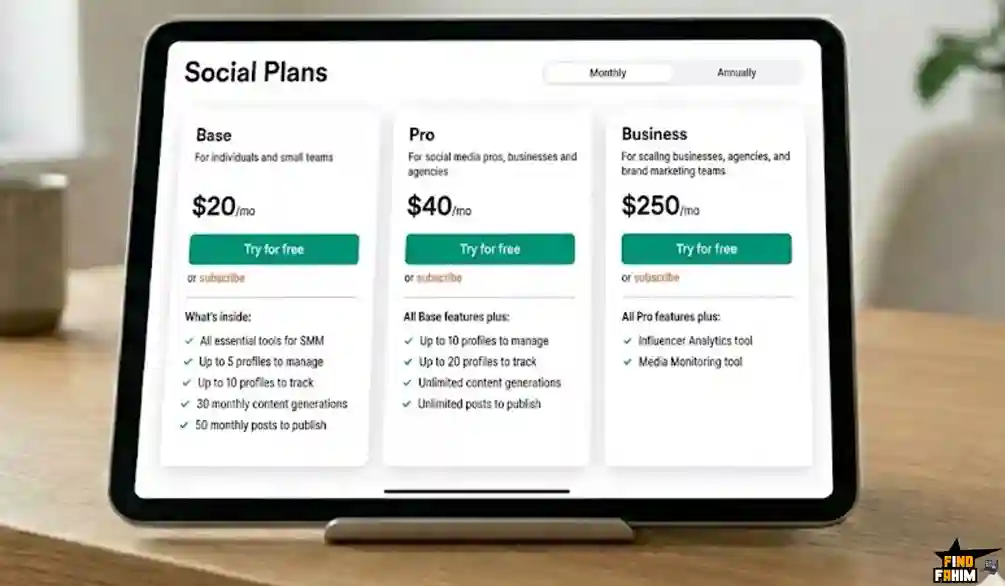
The Cost:
-
Base Plan ($20/mo): You can connect up to 5 profiles (like your Facebook, Instagram, LinkedIn, and X). It lets you schedule 50 posts a month and track how they perform.
-
Pro Plan ($40/mo): This doubles your capacity to 10 profiles and lets you schedule an unlimited number of posts.
My Verdict: It is very convenient to have your SEO data and your Social data in the same login. It stops you from jumping between tools. However, if you are strictly looking to save money, dedicated tools like Metricool or Buffer have generous free plans that do almost the same thing. I recommend this only if you value convenience over cash.
Try the Social Tracker Plan for Free
3. Traffic & Market Toolkit (Semrush Trends)
Warning: This is the most expensive add-on in the entire Semrush ecosystem.
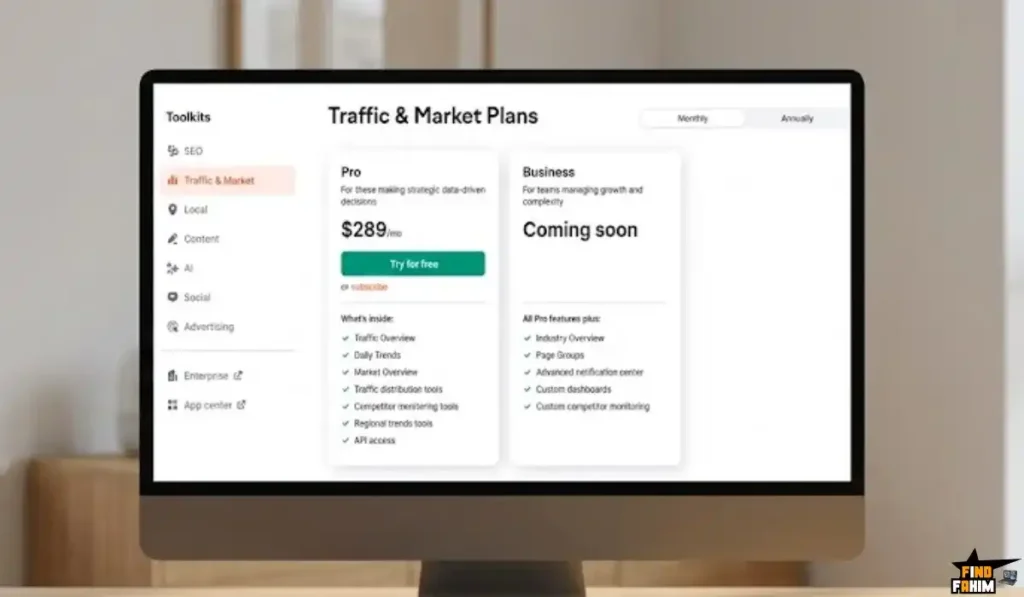
The Cost:
-
Price: $289 / month (per user).
The Problem It Solves: The standard Semrush plan only shows you Search traffic. But what if your competitor is getting all their sales from a secret Facebook Ad campaign, or a partnership with a huge newsletter? Standard SEO tools are blind to that.
This toolkit shows you Total Traffic. It reveals everything:
-
Conversion Rates: See how many visitors on Amazon actually buy a product.
-
Demographics: See if your competitor’s audience is mostly men or women, and how old they are.
-
Referrals: See exactly which blogs are sending traffic to your rivals.
My Verdict: Do not buy this by accident. It costs more than the Guru subscription itself! This tool is strictly for 8-figure e-commerce brands and large agencies who need to spy on the competition’s entire business model, not just their keywords.
Get a Free “Market Explorer” Report
4. Content Toolkit (For High-Volume Publishers)
The Cost:
-
Price: $60 / month.
The Problem It Solves: Writer’s block costs money. If you are trying to build a massive affiliate site or a news blog, you need to publish fast. This toolkit is designed for speed. It helps you build “Topic Clusters” (groups of related articles) instantly.
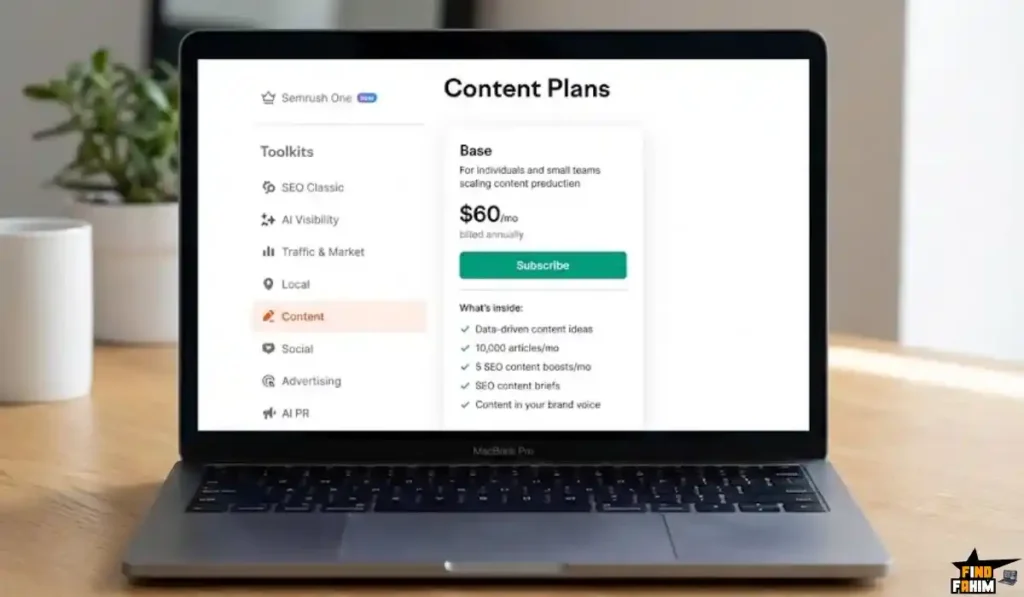
It also includes AI Content Generation. Unlike ChatGPT, which just writes text, this tool drafts articles based on what is already ranking on Google. It suggests the exact headlines and keywords you need to use to beat the competition.
My Verdict: If you are spending $500+ a month on freelance writers, this tool is a cheaper alternative to help you plan your content calendar.
Generate Free AI Content Ideas Now
5. AI PR Toolkit (For Brand Visibility)
The Cost:
-
Base Plan: $149 / month.
The Problem It Solves: This is the new frontier of marketing. For 20 years, we tried to rank on Google. Now, people are asking questions to AI bots like ChatGPT, Claude, and Gemini.
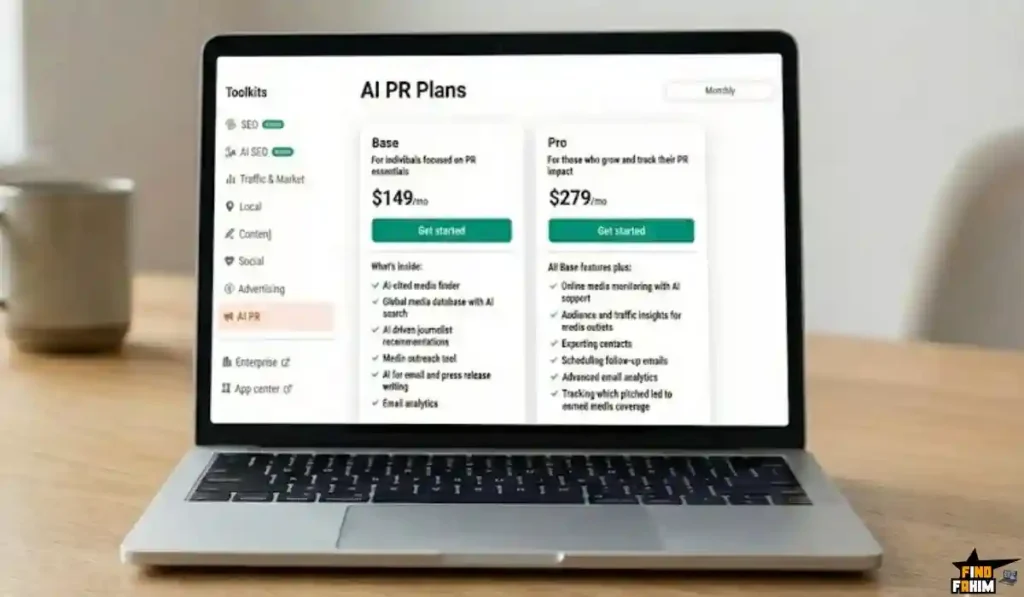
This tool helps you rank inside those AI Models. It finds the journalists, newsletters, and media outlets that are frequently cited by the AI. The goal is to get your brand mentioned in the articles that train the robots, so the robots recommend you to their users.
My Verdict: This is a powerful weapon for PR agencies and Reputation Managers. It is likely too expensive (and too advanced) for the average small business owner right now.
6. Advertising Toolkit (For PPC Spies)
The Cost:
-
Base Plan ($99/mo): Focuses heavily on Google Shopping Ads. It lets you see exactly how competitors structure their product titles and prices to win clicks.
-
Pro Plan ($220/mo): This includes a tool called AdClarity. It gives you “X-Ray Vision” into your competitor’s display ads. You can see the actual banner images and video ads they are running on YouTube, and how much money they are spending.
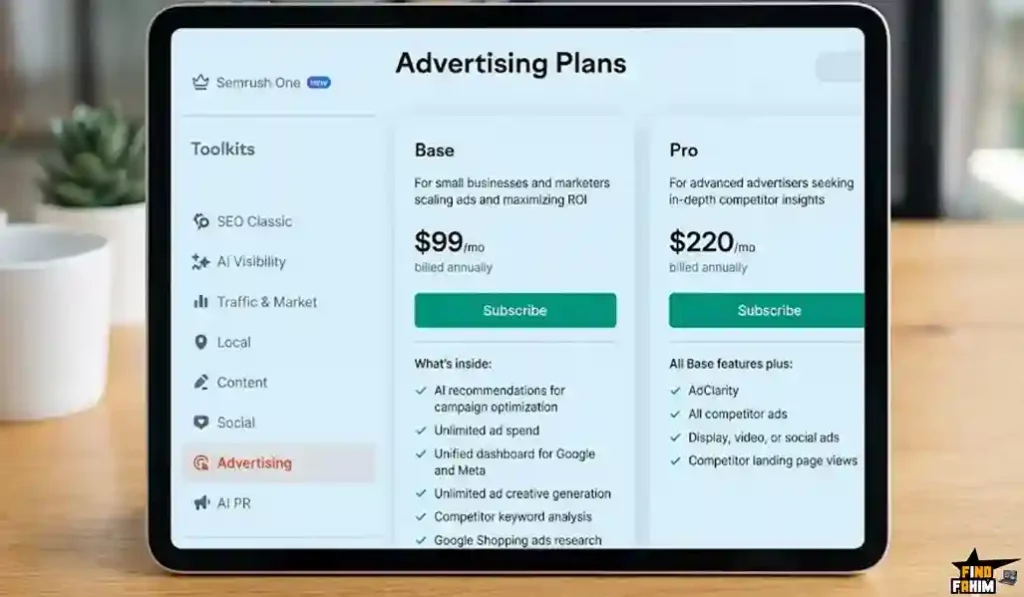
My Verdict: If you are spending $10,000+ a month on ads, you need this. If you can improve your ad performance by just 1% using this data, the tool pays for itself instantly. Stop guessing what ads work and just copy what is already working for others.
Analyze Competitor Ad Copies for Free
7. The Lead Generation Solution (For Agencies)
The Cost:
-
Price: $90 / month (per user).
The Problem It Solves: Finding new clients is the hardest part of running an agency. Cold calling is miserable. This tool acts as a “Hunter.”
It gives you 1,000 “Outreach Credits” per month. You can search a database of millions of companies to find business owners who have bad websites and need SEO help. It gives you their verified email addresses so you can pitch them.
Even better, it lists you in the Semrush Agency Partners directory. This means Semrush sends hot leads directly to your inbox.
My Verdict: High ROI. If you land just one SEO client from these leads, you have paid for the tool for the entire year.
Find Your First SEO Lead for Free
8. My Reports “Add-On” Fees
Most people assume PDF reporting is free on all plans. It is, but there is a catch.
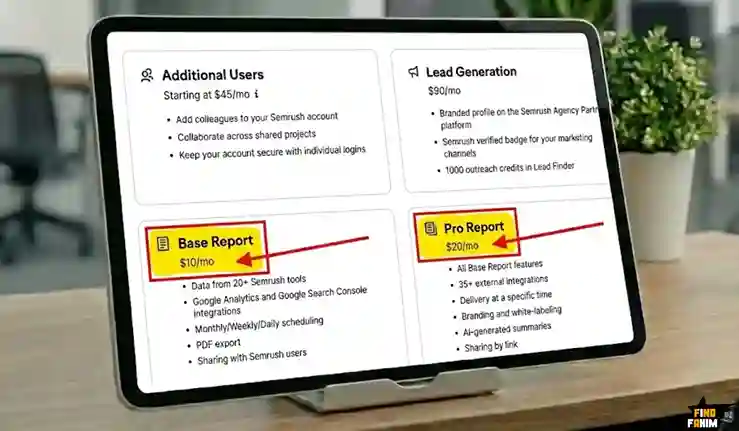
The Cost:
-
Base Report ($10/mo): Required if you want to schedule PDFs to send automatically (e.g., every Monday at 9 AM).
-
Pro Report ($20/mo): Required if you want to use “White Label” branding. This allows you to remove the Semrush logo from the PDF and put your own Agency Logo on the cover.
My Verdict: If you buy the Guru Plan, these features are included for free. You only pay these fees if you are on the cheaper Pro Plan and trying to add advanced features to it. If you have clients, the “White Label” option is worth the $20 to look professional.
Price Wars: Semrush Alternatives (2026)
Before you commit to spending $140 a month, you probably want to know: “Is there a cheaper option that does the same thing?”
I have used every tool on this list for paid client work. Here is the honest financial breakdown of how Semrush compares to its three biggest rivals.
1. Semrush vs. Ahrefs Pricing
Ahrefs is the biggest rival in the industry. For years, they had similar pricing, but Ahrefs recently changed their model to be usage-based (credits), which upset a lot of loyal users.
-
Semrush Pro ($139.95/mo): You get 500 tracked keywords and virtually unlimited reporting. You can run site audits and competitive analysis all day without worrying about hitting a limit.
-
Ahrefs Lite (~$129/mo): This plan uses a strict “Credit System.” Every time you click a filter, open a report, or analyze a URL, you use a credit. You get 500 credits per month.
The Verdict:
On paper, Ahrefs looks $10 cheaper. But this is a trap. If you are an active user who likes to dig deep into data, you will likely burn through your 500 credits in two weeks. Once you hit zero, you are locked out until you pay extra. Semrush allows you to work freely without “Credit Anxiety.”
Winner: Semrush (Better value for heavy users).
2. Semrush vs. SE Ranking Pricing
SE Ranking is the “Challenger” brand that has become very popular for agencies on a budget.
-
Semrush Pro: $139.95 / mo
-
SE Ranking Pro: ~$89 / mo (or significantly less if you pay annually).
The Difference:
SE Ranking is undeniably cheaper. However, you are trading power for price. Its keyword database is roughly 30% the size of Semrush’s database, meaning it often misses long-tail keywords in obscure niches. It also lacks the advanced “Content Marketing” and “Link Building CRM” tools that Semrush includes.
The Verdict:
If you are a freelancer with a tight budget, SE Ranking is a fantastic starting point. But if you need to win high-stakes keywords in competitive industries (like Insurance or Finance), you need the superior data depth of Semrush.
Winner: SE Ranking (For budgets under $100).
3. Semrush vs. Moz Pro Pricing
Moz is the “Old Guard” of the SEO world. It is famous for its simple interface and Domain Authority (DA) metric.
-
Semrush Pro: $139.95 / mo
-
Moz Pro Standard: $99 / mo
The Difference:
Moz is $40 cheaper per month. For that savings, you get a tool that is much simpler to use but significantly slower. In my tests, Moz takes days to discover new backlinks that Semrush finds in hours. Moz also limits you to just 3 Campaigns (Projects) on the base plan, whereas Semrush gives you 5 Projects.
The Verdict:
Moz is a safe choice for beginners who just want to track rankings and check DA scores. However, for an extra $40, Semrush gives you social media tools, PPC research, and a content writing assistant. The value gap is massive.
Winner: Semrush (Far more features for the price).
Comparison Matrix Pricing Summary
Here is the side-by-side breakdown of the entry-level plans for all four tools.
| Feature | Semrush Pro | Ahrefs Lite | SE Ranking Pro | Moz Pro Standard |
| Monthly Price | $139.95 | ~$129 | ~$89 | $99 |
| Reporting Limits | Unlimited | 500 Credits | Unlimited | Unlimited |
| Tracked Keywords | 500 | 750 | 1,000 | 300 |
| Backlink Speed | Fastest | Fast | Average | Slow |
| Best For… | Power Users | Data Purists | Budget Agencies | Beginners |
| My Verdict | Best ROI | Too Restrictive | Best Value | Good for Basics |
Real-World “Profit Math” Scenarios
Most pricing guides just list the costs. But business is about ROI (Return on Investment). Let’s run three real-world scenarios to see if Semrush is actually profitable for you.
Scenario 1: The “Growing Agency” Math
The Profile: You run a small SEO agency with 5 clients on retainer ($1,500/mo each). You have 2 employees.
- The Cost: Guru Plan ($249.95) + 2 Extra User Seats ($160.00) + Lead Generation Add-On ($90.00) = ~$500.00/month.
- The Return:
- Semrush allows you to generate “White Label” PDF reports in 5 minutes.
- Without Semrush, you would spend 4 hours per client manually gathering data.
- 4 hours x 5 clients = 20 hours saved.
- If your hourly rate is $100, you saved $2,000 in labor.
- Verdict: PROFITABLE. The tool pays for itself in time savings alone.
Scenario 2: The “E-Commerce Spy” Math
The Profile: You run a Shopify store selling pet supplies. You want to beat a competitor who is making $1M/year.
- The Cost: Guru Plan ($249.95) +.Trends Add-On ($289.00) = ~$540.00/month.
- The Return:
- Using Trends, you identify that 40% of your competitor’s traffic comes from a specific Pinterest ad strategy you aren’t using.
- You copy the strategy and generate an extra $5,000 in sales next month.
- Verdict: PROFITABLE. Data is only expensive if you don’t use it. For e-commerce, one insight can pay for the entire year’s subscription.
Final Verdict: Which Plan Should You Buy?
After analyzing every dollar, feature, and hidden cost, here is my final recommendation for 2026.
I don’t believe in “one size fits all.” Find the persona below that matches you and follow that advice.
Scenario A: The Solopreneur / Blogger
- You are: A freelancer, affiliate marketer, or owner of 1-3 niche sites.
- Recommendation: Buy Semrush Pro (Annual).
- Why: You need keyword research, rank tracking, and site audits. You do not need historical data or branded reports. Paying annually brings the cost down to ~$117/mo, which is the best ROI in the industry.
- Don’t Buy: The “Semrush One” bundle. You don’t need AI tracking yet. Save the $60/month.
Scenario B: The Agency Owner
- You are: Managing 5+ clients and have a team of writers.
- Recommendation: Buy Semrush Guru.
- Why: The “Content Marketing Toolkit” replaces tools like SurferSEO (saving you money). The “Historical Data” is essential for explaining traffic drops to clients. The “Branded PDF Reports” make you look professional.
- Don’t Buy: The “Trends” add-on unless you specifically sell market research services.
Scenario C: The “Future-Proof” Brand
- You are: A VC-backed startup or a brand heavily focused on PR and Reputation.
- Recommendation: Buy Semrush One Starter.
- Why: You are terrified of ChatGPT stealing your traffic. You need the AI Visibility Toolkit to track your “Share of Voice” in the LLMs. The standard SEO plan won’t show you this data.
Start Your 14-Day Free Trial Here (Exclusive)
Frequently Asked Questions (SemRush)
How much does Semrush cost per month?
Semrush has three main pricing tiers in 2026. The Pro Plan costs $139.95 per month for freelancers, the Guru Plan costs $249.95 per month for agencies, and the Business Plan costs $499.95 per month for large enterprises. You can save around 17 percent by paying annually.
Is there a free version of Semrush?
Yes, Semrush offers a Free Forever account, but it is very limited. You can perform up to 10 searches per day and track 10 keywords, which is useful for quick checks but not enough for professional SEO work.
Does Semrush offer a money-back guarantee?
Yes, Semrush provides a 7-day money-back guarantee on all new subscriptions, including monthly and annual plans, if you cancel within the first 7 days.
What is the difference between Semrush Pro and Guru?
The Pro plan only shows live data, while the Guru plan unlocks historical data back to 2012, the SEO Writing Assistant, content marketing tools, and branded PDF reports, making it ideal for agencies.
How much does it cost to add a user to Semrush?
Additional user seats are billed separately. Pro plan users pay $45 per month per extra user, Guru plan users pay $80 per month, and Business plan users pay $100 per month per user.
Is Semrush cheaper than Ahrefs?
Yes, Semrush generally offers better value for heavy users. While pricing is similar, Semrush allows more reports and usage compared to Ahrefs’ stricter credit-based system.
Does Semrush have a student discount?
Semrush does not offer a public student discount, but students and educational institutions can contact the Semrush sales team to ask about special academic offers or promotions.
How do I cancel my Semrush subscription?
You can cancel Semrush by logging into your account, visiting the Subscription Info page, clicking the Active plan link, and following the cancellation steps, or by contacting support via email.
Does Semrush offer discounts for non-profits?
Yes, Semrush provides special pricing for registered non-profit organizations, but you must contact their sales team and submit verification documents to qualify.
Is the Semrush One bundle worth it?
Semrush One is worth it if you need AI brand tracking. It combines core SEO tools with the AI Visibility Toolkit and can save money compared to purchasing both separately.
Can I pause my Semrush subscription?
Yes, Semrush allows you to pause your subscription for a limited time while keeping your project data, rankings, and historical reports intact.
Does Semrush charge extra for local SEO?
Basic rank tracking is included, but the Listing Management tool for local SEO is a paid add-on costing around $20 to $40 per month per location.
What happens if I exceed my Semrush limits?
When you reach your plan limits, Semrush will stop allowing new data additions and prompt you to upgrade or remove existing keywords or projects.
Does Semrush have a lifetime deal?
No, Semrush does not offer a lifetime deal. Claims of lifetime Semrush accounts are usually scams or shared accounts that risk suspension.
Is the AI Visibility Toolkit included in the Pro plan?
No, the AI Visibility Toolkit is not included in the standard Pro plan. You must buy it as an add-on or switch to the Semrush One bundle to access AI tracking features.

Hi, I’m Fahim — a SaaS tools reviewer and digital marketing expert with hands-on experience helping businesses grow using the right software. I research, test, and personally use a wide range of AI, business, productivity, marketing, and email tools for my agency, clients, and projects. I create honest, in-depth reviews and guides to help entrepreneurs, freelancers, startups, and digital agencies choose the best tools to save time, boost results, and scale smarter. If I recommend it, I’ve used it — and I only share what truly works.